

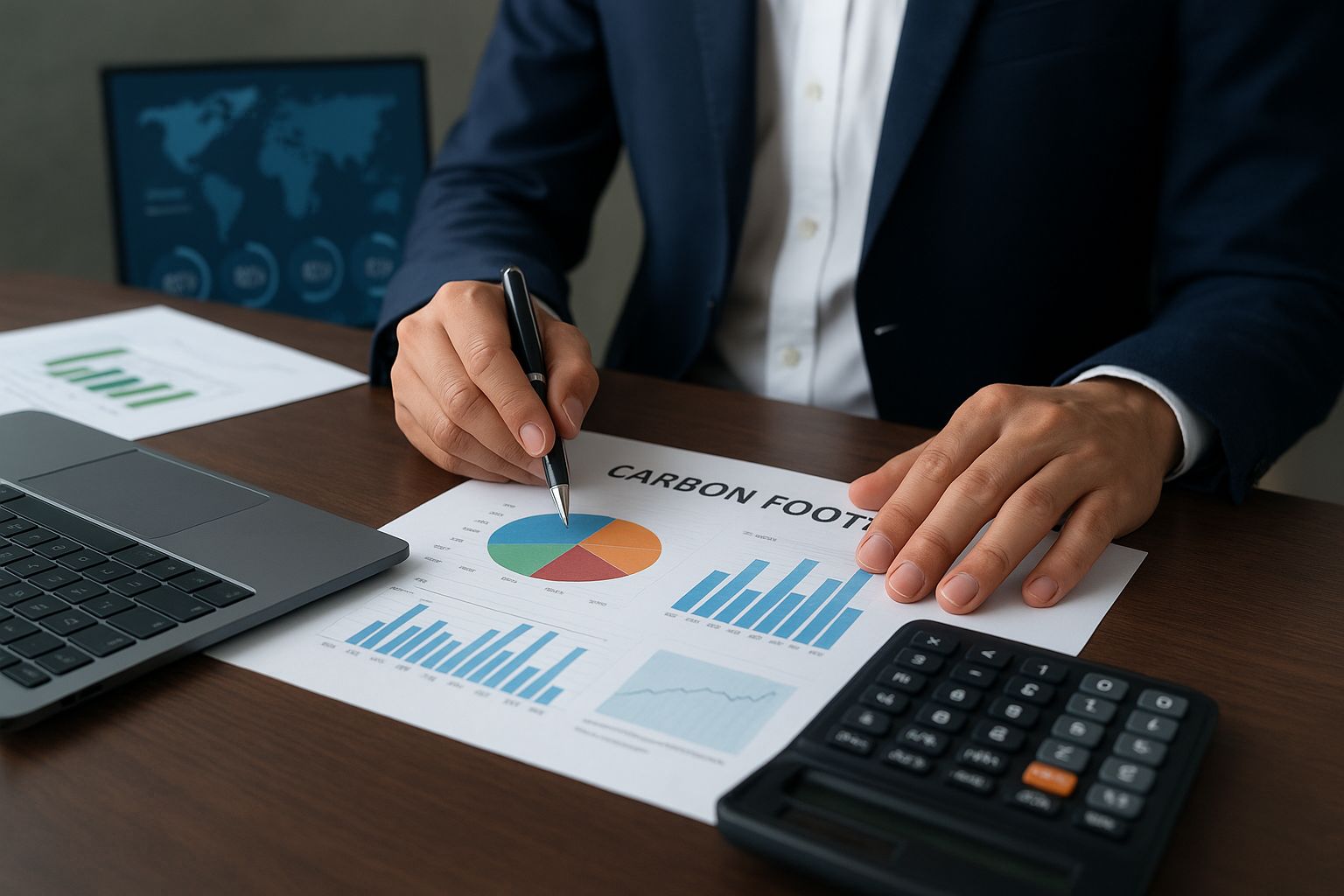
Why Calculate Your Carbon Footprint?
A carbon footprint is the total greenhouse gas (GHG) emissions, usually expressed in CO₂-equivalent (CO₂e), generated by activities across individuals, products, or organizations.
Why It Matters:
- For Individuals: Understanding your footprint empowers you to make informed decisions from daily travel to lifestyle choices that reduce emissions and foster environmental responsibility.
- For Businesses: Measuring emissions helps identify hotspots across operations and value chains (Scope 1, 2, and 3), enabling effective reduction strategies, improved transparency, and stakeholder trust.
What Is a Carbon Footprint?
A carbon footprint aggregates GHG emissions including CO₂, methane (CH₄), and nitrous oxide (N₂O) over the complete lifecycle of activities, products, or services. It’s standardized using Global Warming Potential (GWP) to convert varied gases into a common unit: CO₂e.
Who We Serve
👤 Individuals
Eco-conscious people wanting to offset personal lifestyle emissions from flights, cars, and home energy use.


🏢 Small to Medium Enterprises
Businesses aiming to offset Scope 1, 2, or 3 emissions for sustainability goals and regulatory compliance.
🏭 Large Corporates & MNCs
Companies with ESG goals and net-zero targets needing ongoing carbon retirement support at large scale.

🔄 Easy Steps to Calculate and Offset for Carbon Neutrality
Gather Activity Data
Collect key data:
- Individuals : Energy use (electricity, cooking gas), travel (car, flights, public transport), waste, consumption habits.
- Businesses : Energy use, fuel, production data, supply chain metrics, business travel, product lifecycle metrics
Apply Emission Factors
Use trusted standards like GHG Protocol or ISO 14064. Multiply activity data by the right emission factors to calculate GHGs in CO₂e.
Interpret Your Results
- Individuals : See your total carbon footprint and compare it with national or global averages. Use charts or visual summaries to understand your main emission sources.
- Businesses : Get a breakdown across Scopes 1, 2, and 3 to identify key areas for mitigation and potential for value chain improvements.
Reduce Your Emission
- Switching to cleaner energy or improving energy efficiency.
- Choosing low-carbon transportation or optimizing travel.
- Minimizing waste and encouraging sustainable consumption.
- Engaging suppliers or redesigning processes to lower Scope 3 emissions
Offset the Rest
Invest in certified carbon credits – such as reforestation, renewable energy, or methane capture – to offset unavoidable emissions.
Declare Carbon Neutrality
With reduced and offset emissions, you achieve carbon neutrality – a state where net carbon emissions are zero.

Get In Touch
-
C-5/70 Third Floor, New Kondli, East Delhi Delhi- 110096
-
Mon - Sat 9 Am - 7 PM